
PRODUCT TECHNOLOGY BRIEFING | DOC. ZWP-WTT-001 Rev. 1.0
WTT — Wireless Rotary-Type Torque Transducer
Keep the Tool. Add the Intelligence.
External wireless torque sensing — measure · monitor · control · verify · trace · connect
Does Smart Fastening Require Replacing the Tool?
Two approaches — with very different cost and feasibility
Conventional Practice
Tighten first, verify separately, mark and record by hand. More steps, more labour, limited process data.
Integrated Smart Tool
Torque sensing built into the tool. Complete, but it requires replacing the entire tool fleet with transducerized models.
ZIPPTORK External Sensing
Torque sensing separated from the tool and placed between tool and fastener. Keep the tools; add sensing and data.
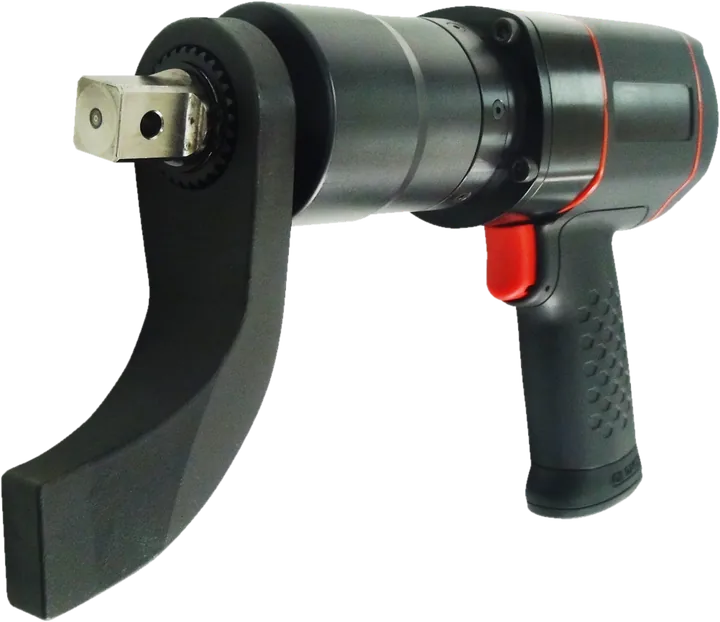
ZIPPTORK decouples torque sensing from the tool, so existing impact, pulse, clutch-type and auto-shutoff tools can be upgraded to smart fastening.
Why Torque Sensing Has Been Limited on Impact & Pulse Tools
The question is not internal or external — it is whether the sensing survives
The real barrier is the sensing environment, not the sensing location
Impact wrenches and pulse tools generate repeated shock, high vibration, rapid torque peaks and intermittent energy transfer. Conventional torque sensing was designed for calmer environments — clutch tools, DC nutrunners, continuous-drive tools.
US 11,150,153 B2
Torque Sensing and Transmitting Device
Double Damping
Primary + secondary vibration isolation protecting the circuit board and battery module
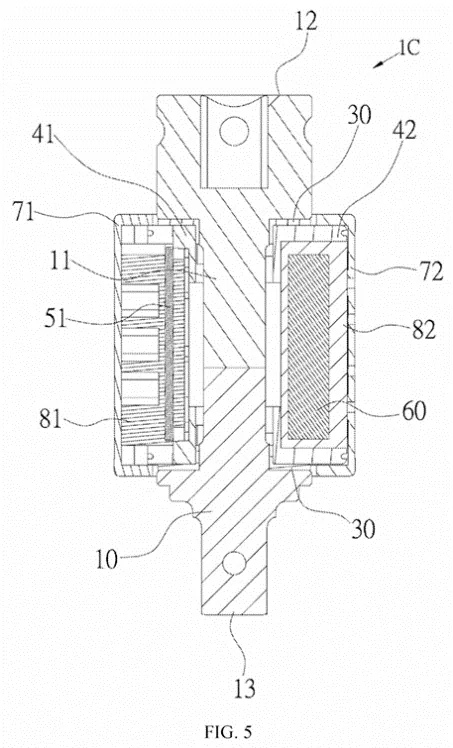
ZIPPTORK protects the electronic sensing and transmission system with a patented double vibration-damping architecture, bringing torque sensing into severe impact and high-vibration fastening.
Four Things That Decide the Selection
Choose the sensing family first, then match interface and objective
Signal Acquisition
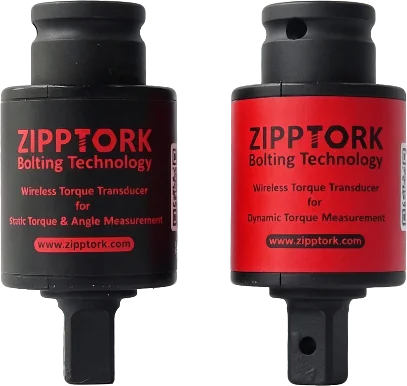
Static (TTA family) / Dynamic (TTE family)
Refers to how the torque signal is acquired — not whether the tool is manual or powered
Application Objective
Verify · Monitor · Control
A verified result, or visibility and control of the process
Tool Interface
Square-drive · Multiplier · Bit-type · Socket-type
Determines TTAS / TTAM / TTEB / TTES / TTEH
Torque Capacity
Measured tool output × 1.2–1.3
Catalog torque is not actual application output
Two Sensing Families, Two Jobs
Static and dynamic sensing need different transducer configurations
Static torque sensing — verify the fastening result
For manual and click-type torque wrenches and torque multipliers. Measures torque, torque + angle and residual torque, for verification and data collection.
Dynamic torque sensing — monitor and control the process
For impact wrenches, pulse tools, clutch-type and auto-shutoff tools. Measures real-time torque and torque vs. time, for monitoring, controller feedback and data collection.
One wireless data platform
Both families use the same wireless torque-sensing platform — data goes directly to a laptop or tablet, or back to a ZIPPTORK torque controller.
Static and dynamic describe the torque signal acquisition and measurement method — not whether the tool is manual or powered.
One Platform, Six Jobs
From measuring torque to making every fastening traceable
MEASURE
Torque measured directly between tool and fastener
MONITOR
Real-time torque vs. time, every fastening cycle
CONTROL
Real-time torque fed back to the torque controller
VERIFY
Residual torque by the digital first-movement method
TRACE
Torque plus identification data — a traceable record
How It Works
From mechanical torque input to real-time wireless torque data
Torque input and sensing
Torque passes through the transmission body; shaft deformation is converted into an electrical signal by the strain gauge.
Signal amplification and calculation
The signal is amplified and processed into a torque value.
Wireless transmission
Torque data is transmitted to a controller, laptop or tablet — no rotating cables.
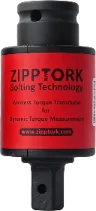
Do not select a dynamic TTE by the tool nameplate alone: measure the tool's maximum output at maximum working pressure or voltage, then select 1.2–1.3× that capacity.
From Torque Sensing to Connected Production
Two data paths, one wireless torque-sensing platform
Fastening / Verification Tool
Wireless Torque Transducer
Wireless Torque Data
Controller / Laptop / Tablet
Application Software
Database / MES
Impact · Pulse · Clutch · Auto-shutoff · Manual torque wrench · Multiplier
TTAS · TTAM · TTEB · TTES · TTEH
Torque · Torque + angle · Torque vs. time
DR-RF dongle direct, or TCA / TCB / TCC controller
Measurement · Monitoring · Judgment · Verification
Production records · Quality records · Traceability
Two data paths and traceability data
Path A — direct: transducer → DR-RF dongle → laptop / tablet → application software
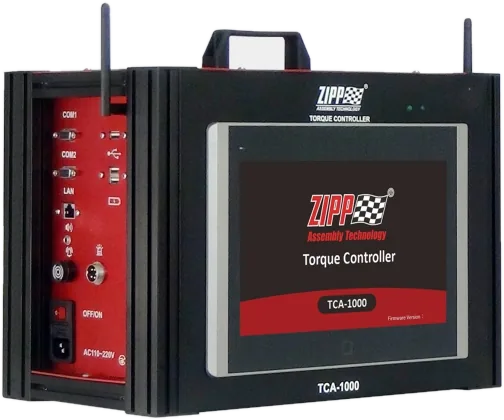
Path B — controller: TTE → real-time torque feedback → TCA / TCB / TCC → fastening control
Identification data: operator · workpiece · bolt · tool · transducer · timestamp
Application Software & Fastening Records
Every fastening and verification becomes a record you can search and hand over
Real-time torque monitoring
Torque vs. time · Cycle-to-cycle comparison · Process visibility
Algorithm-based abnormality detection
Misaligned fastening · Thread damage · Abnormal engagement · Re-hit
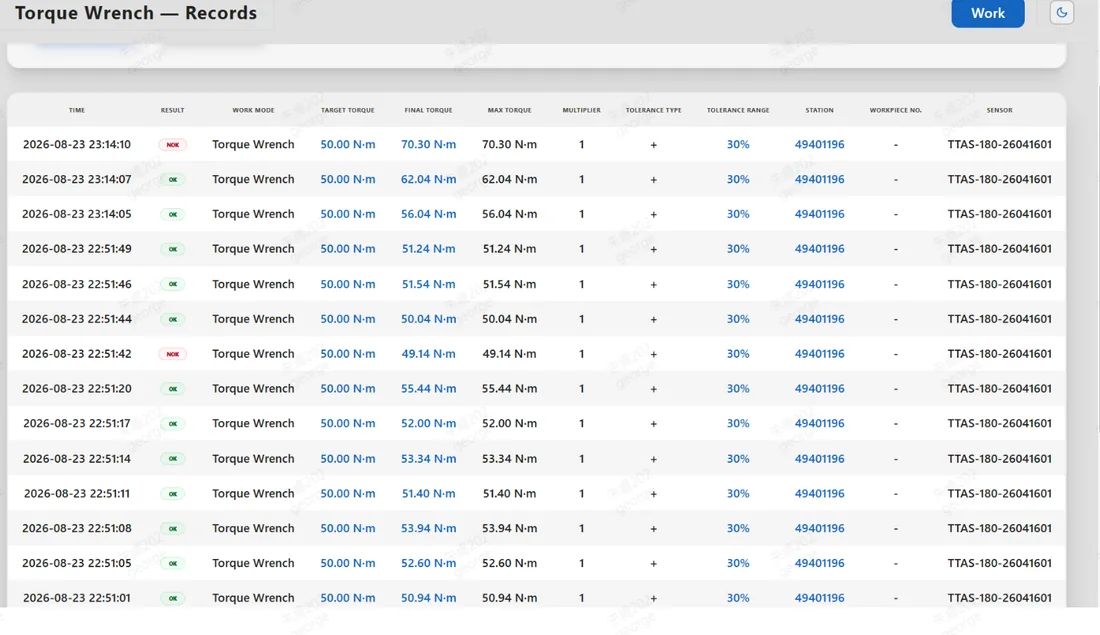
OK / NOK judgment
Judged automatically against target torque and tolerance
Records and traceability
Timestamp · Torque · Angle · Tool / transducer ID · Workpiece ID · Result
Product Specifications
Static TTA and dynamic TTE families — five mechanical configurations
Accuracy
±1%
Wireless
Bluetooth / RF
TTA measurement
Torque / Torque + angle / Residual torque
TTE measurement
Real-time torque / Torque vs. time
Static selection
Rated torque = max. usable torque
Dynamic selection
Measured tool output × 1.2 – 1.3
| Model | Sensing | Typical Tool | Interface | Torque Range |
|---|---|---|---|---|
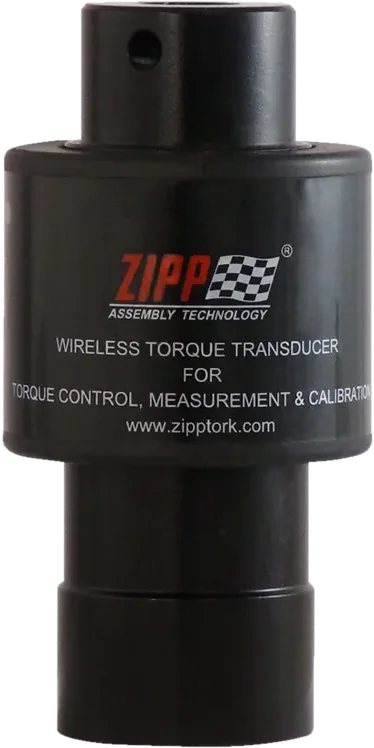
| TTAS | Static | Manual / click torque wrench | Square-drive | 10 – 3,000 Nm |
| TTAM | Static | Torque multiplier | Multiplier config. | 500 – 1,000 Nm |
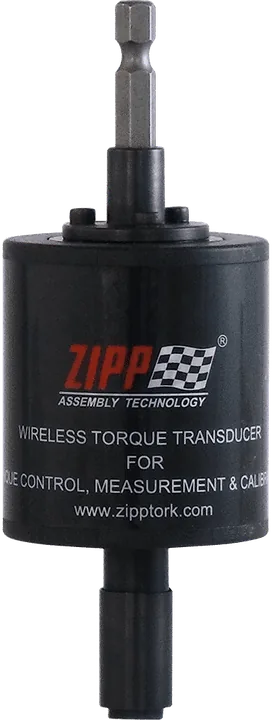
| TTEB | Dynamic | Screwdriver / bit-type | 1/4" (6.35 mm) | 0.5 – 20 Nm |
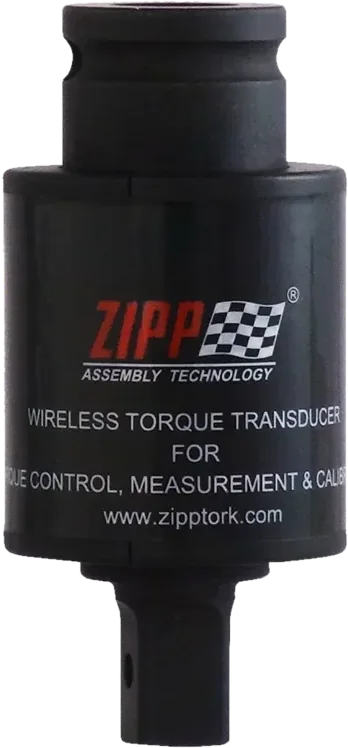
| TTES | Dynamic | Impact / pulse / nutrunner | Square or spline | 10 – 3,000 Nm |
| TTEH | Dynamic | Impact / pulse / nutrunner | Socket-type | 10 – 3,000 Nm |
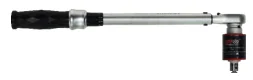
Dynamic example: measured tool output 140 Nm → ×1.2 = 168 Nm → TTES-180; with a 30% margin (182 Nm), select the next capacity, TTES-250. On a hard joint maximum output is typically reached within 1.5–2 s; a soft joint needs longer.
Six Typical Applications
Upgrade the fastening and verification you already run — don't rebuild the line
Impact & pulse fastening
Shock-resistant dynamic sensing · Real-time monitoring · Controller feedback · Data
High-torque verification
TTAS + multiplier: gear ratio → angle, torque ratio → residual torque
Clutch / auto-shutoff digitalization
Keep the original shut-off mechanism; add monitoring and abnormality detection
Controller feedback
TTE → TCA / TCB / TCC in Transducer and ACCU modes
Residual torque verification
TTAS digital first-movement method replaces visual judgment
Traceability & integration
Local → network → database / MES
WTT — Keep the Tool, Add the Measurement That Was Missing
MEASURE → MONITOR → CONTROL → VERIFY → TRACE → CONNECT
Torque sensing does not have to live inside the tool — external sensing upgrades the fleet you already own.
Static TTA and dynamic TTE families, five mechanical configurations, covering 0.5 Nm to 3,000 Nm.
A patented double vibration-damping architecture (US 11,150,153 B2) brings sensing into impact and pulse environments.
The digital first-movement method turns residual torque verification into a defined, repeatable, traceable measurement.
Bring this to your line.
Send the fastener size, target torque and the tool you use today. A product engineer replies with the configuration that fits.
ZIPPTORK | China Pneumatic Corporation | www.zipptork.com