
PRODUCT TECHNOLOGY BRIEFING | DOC. ZWP-TC-001 Rev. 1.0
TCA / TCB / TCC Torque Controllers
Keep Your Tools. Add the Control.
A torque control methodology built for air impact wrenches and pulse tools
Powerful Tools, Uncontrolled Torque
The everyday reality of medium- and high-torque fastening
Why they are still used
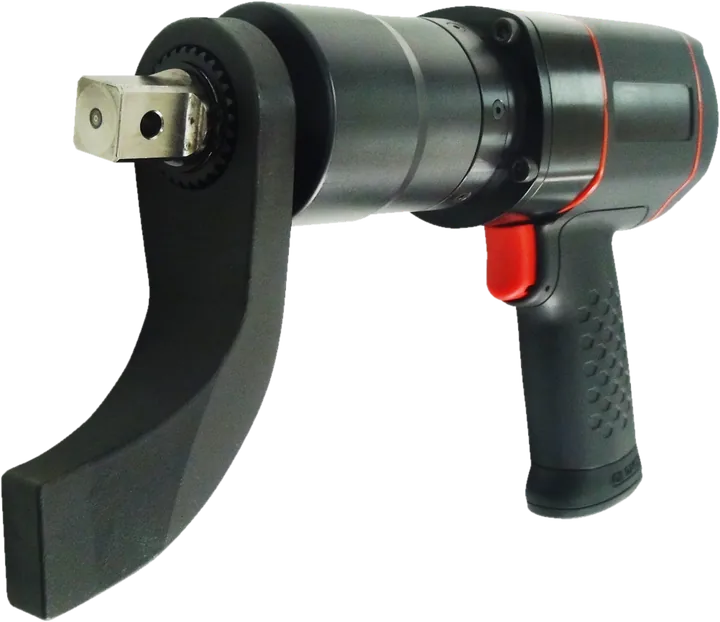
High productivity, high power-to-weight ratio, rugged and durable — the workhorse of medium- and high-torque fastening.
What goes wrong
Torque is hard to control consistently, sensitive to operating conditions, with no real-time monitoring and no fastening data.
The real challenge
No longer how to tighten faster, but how to make every fastening measurable, controllable and traceable.
Most fastening operations still rely on operator experience rather than a defined control process. That is the gap ZIPPTORK closes.
One Patented Control Logic, Three Operating Modes
From a patented pressure–residual torque relationship to application-based training
Patented control logic: the pressure–residual torque correspondence
Under a defined tool, fastening combination and fastening duration, a correspondence is established between working air pressure and residual torque. It is the foundation of every ZIPPTORK torque controller, and years of field application have grown it into an application-based training architecture.
Pressure / Transducer / ACCU
Three operating modes across different cost and accuracy needs
Job Profile
Every fastening operation runs from an established profile
One patented control logic · application-based training · three operating modes — one controller platform, three control strategies.
Four Management Gaps on Conventional Impact & Pulse Tools
The tools are fine — the process simply was never recorded
Torque is hard to control
Same tool, same job, results still drift
No repeatable basis for control
No real-time monitoring
No way to judge the cycle as it happens
Problems surface only afterwards
Sensitive to conditions
Pressure fluctuation, air supply condition, fastening time variation
Change the conditions and the torque changes
No data, no traceability
No fastening records, no identification data
Difficult to integrate with MES / IIoT
Three Operating Modes
Three trade-offs between cost, control accuracy and existing tool capability
Pressure Mode | Tool + Controller
Control by trained working air pressure and fastening time; pressure is continuously stabilized and air shuts off at the trained time. No direct torque feedback. Typical controllability: impact wrench ±15–20%, pulse tool ±10–15%.
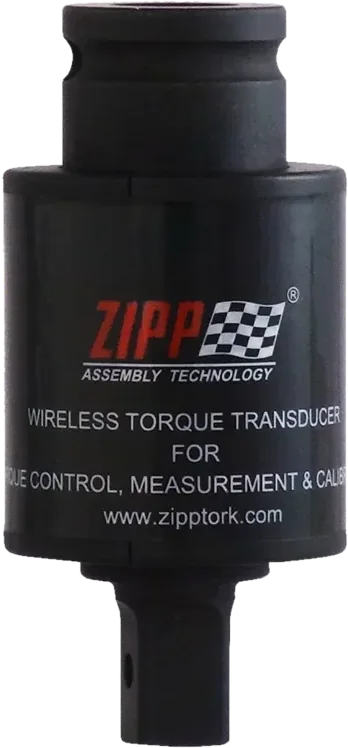
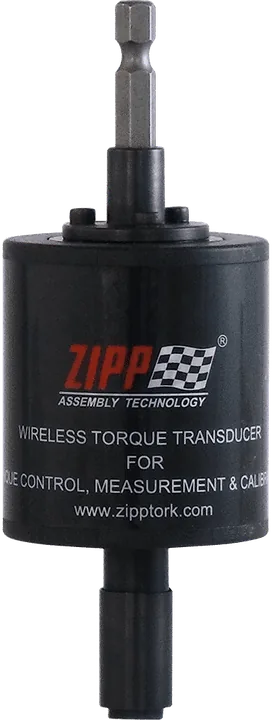
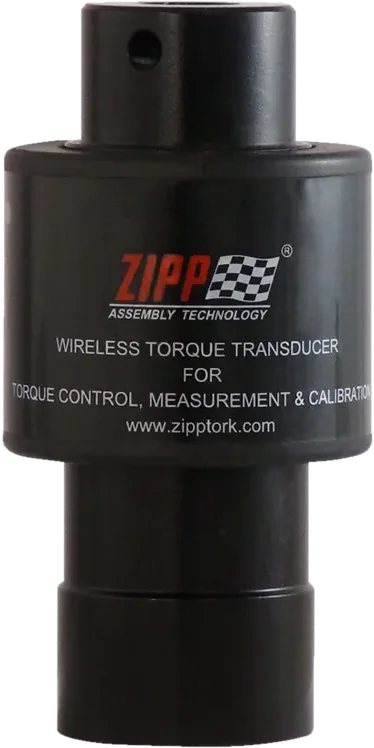
Transducer Mode | Tool + Wireless Torque Transducer + Controller
Real-time torque feedback and torque compensation, with automatic shut-off at target torque — the highest control accuracy. Typical controllability: impact wrench ±10–15%, pulse tool ±5–10%.
ACCU Mode | Tool + Transducer + Extended Duration
When the existing tool cannot reach target torque within the original duration, fastening time is extended to accumulate impact energy while torque and pressure are monitored. Typical controllability: impact wrench ±12–17%, pulse tool ±7–12%.
Control accuracy depends on a correctly established Job Profile, correct transducer installation and stable operating conditions.
Five Steps From Training to Production
Turning actual fastening behavior into a repeatable Job Profile
Define the combination
Tool · Bolt / nut / washer · Joint · Stable air supply · Initial fastening time
Select the operating mode
Pressure / Transducer / ACCU
Controller training
On-station (preferred) or off-line (alternative)
Create the Job Profile
Tool · Fastener · Target torque · Pressure · Fastening time · Mode
Run production
Monitor → automatic shut-off → OK / NOK → fastening data
PH ≈ 90–95% of the highest stable working air pressure available at the workstation; PL ≈ the lowest pressure at which the selected tool still operates consistently.
Controller Training Architecture
Two training locations, two training methods
On-station training (preferred)
Performed under actual production conditions — directly, or assisted by SWF + ST.
Off-line training (alternative)
Production conditions are replicated on a test bench or on the FCA analyzer.
Two training methods
Pressure / residual torque relationship (PH→TH, PL→TL), or time-based characterization (PH + defined time → clamp force vs. time → required fastening time for target torque).
Any change to the preset fastening duration requires retraining and a new Job Profile — old parameters must not be carried over.
From Tool to Connected Production
An open architecture that brings existing pneumatic tools into a controlled, connected, traceable system
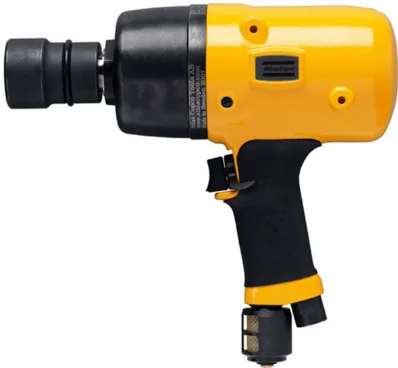
Air Impact Wrench / Pulse Tool
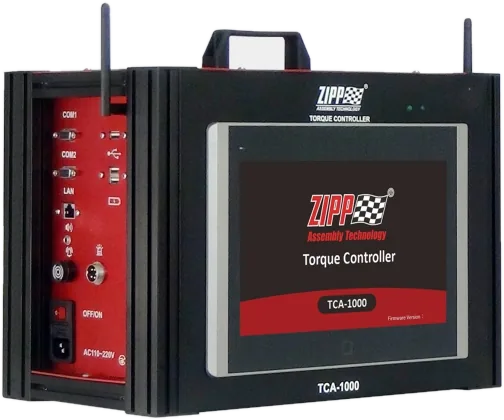
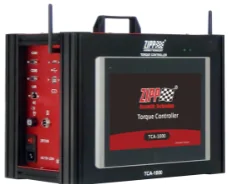
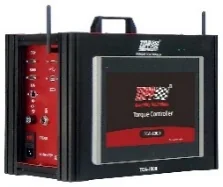
TCA / TCB / TCC Torque Controller
Execute Job Profile Mode
Monitoring & Automatic Shut-Off
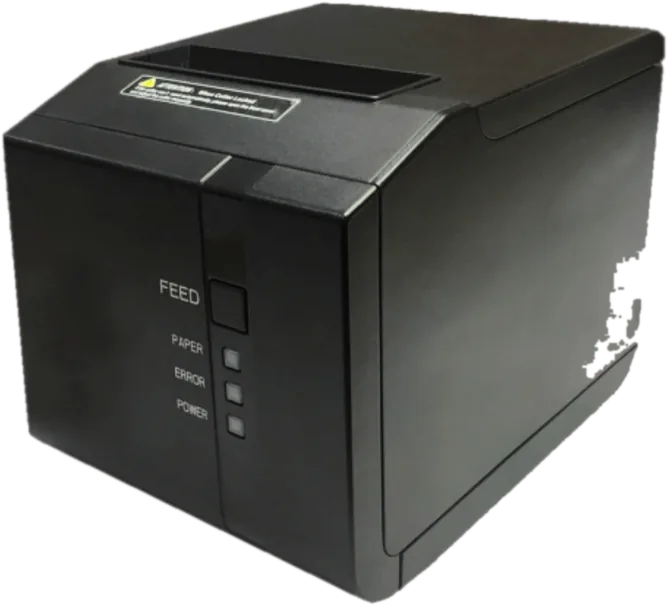
OK / NOK + Fastening Data
Production System / MES
Any compatible brand, any impact mechanism
Job Profile management · intelligent control logic
Pressure / Transducer / ACCU
Pressure stabilization · torque feedback · alarms
Job Profile · pressure · time · torque · identification
Traceability · quality · process analysis · production
Open-platform tool compatibility
Brand independent — works with compatible air impact and pulse tools from different manufacturers
Mechanism independent — twin hammer · jumbo hammer · pin clutch · rocking dog · single / multi-blade pulse units
Application-based training — parameters established on the actual tool, fastener, joint and workstation conditions
Fastening Data & Production Traceability
Every result recorded with its Job Profile and identification data
Fastening data
Job Profile · Fastening time · Working air pressure · Torque · Result
Identification data
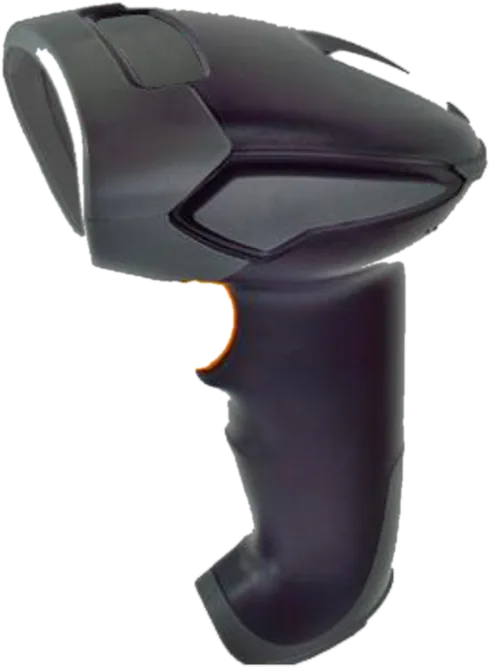
Tool ID · Transducer ID · Operator ID · Barcode · Serial no. · Bolt ID · Timestamp
Judgment & alarms
Pressure out of allowable range → alarm + NOK; every cycle judged against the Job Profile
Upload & integration
Controller → production database / MES → traceability · quality review · process analysis
Controller Specifications
One control architecture, three configurations for different production needs
Max. air flow
2,000 L/min (all three)
Operating modes
All three modes on TCA / TCB / TCC
Pressure mode accuracy
Impact ±15–20% | Pulse ±10–15%
Transducer mode accuracy
Impact ±10–15% | Pulse ±5–10%
ACCU mode accuracy
Impact ±12–17% | Pulse ±7–12%
Serial interface
2×RS-232 / 1×RS-232 / —
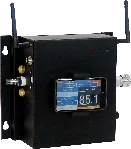
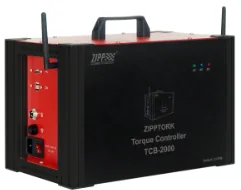
| Item | TCA-2000 | TCB-2000 | TCC-2000 |
|---|---|---|---|
| User interface | 10" built-in HMI | PC / laptop | PC / tablet |
| Operating system | Linux | Windows | Android / Windows |
| Air pressure regulation | Automatic | Automatic | Manual |
| Torque curve display | — | ✓ | ✓ |
| Communication | Ethernet / Wi-Fi | Wi-Fi / Bluetooth | Wi-Fi / Bluetooth |
| Weight | 10.5 kg | 6 kg | 3.7 kg |
Torque source: measured torque in Transducer Mode, estimated final torque in ACCU Mode, estimated residual torque in Pressure Mode. TCA and TCB regulate pressure automatically through a proportional valve; TCC monitors pressure only and flags out-of-range fastening as NOK. Air flow measurement is optional and provides air-consumption information only — it does not affect torque control accuracy. Specifications subject to engineering review and confirmation.
Six Typical Applications
The best application is not defined by industry — it is defined by a repeatable fastening process
High-torque assembly
Large bolts and high-torque fastening at fixed production stations
Traceable production
Fastening results plus identification data form a complete record
Repetitive assembly
Consistent, trainable, repeatable fastening stations
Tool manufacturers
Add a smart control option to existing tool platforms
Multiple fastening jobs
Different jobs managed and switched through Job Profiles
Distribution partners
Create upgrade and service opportunities from the installed tool base
TC — Keep the Power, Add the Control
TRAIN → JOB PROFILE → CONTROL → RECORD → CONNECT
One patented control logic — the pressure–residual torque correspondence — grown into three selectable operating modes.
Open platform: brand independent, mechanism independent — existing pneumatic tools join the control system directly.
Application-based training: control parameters are established on the actual tool, fastener, joint and workstation.
Every fastening leaves a Job Profile, its process parameters and an OK / NOK result, ready to upload to MES.
Bring this to your line.
Send the fastener size, target torque and the tool you use today. A product engineer replies with the configuration that fits.
ZIPPTORK | China Pneumatic Corporation | www.zipptork.com