
Technical · 05/15/2026
From Assembly Line to Quality Record: A Practical Guide to Torque Measurement
Consistent, high-quality manufacturing starts with one discipline most plants underinvest in: torque measurement.
A bolt tightened to the wrong torque isn’t just a defect — it’s a liability. It can cause joint failure in the field, trigger costly recalls, or create safety hazards that no inspection catches until it’s too late. Yet in many facilities, torque monitoring is still treated as a one-time setup task rather than a continuous quality process.
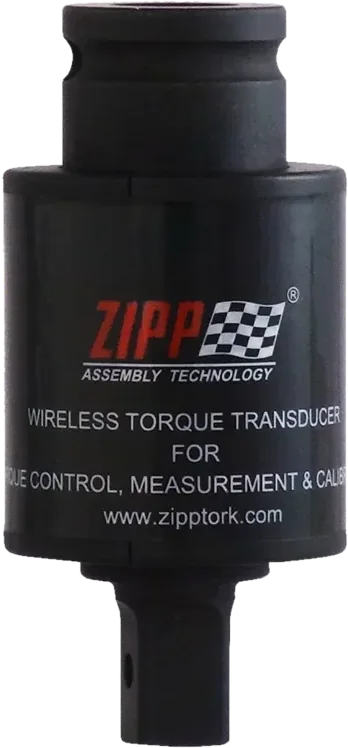
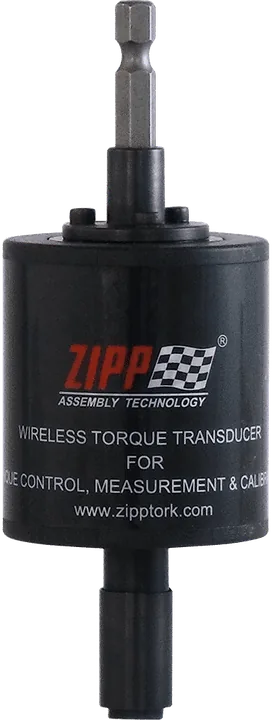
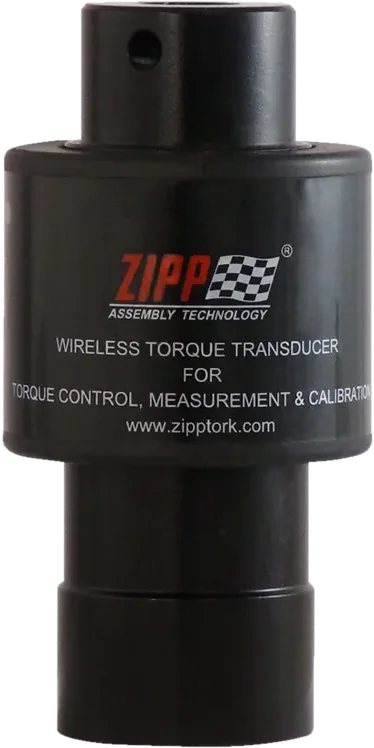
This guide walks through the six pillars of a robust torque measurement program — and shows how ZIPPTORK’s Wireless Rotary Torque Transducers (TTES and TTAS Series) and Torque Tension Tester (TTT) can be integrated at each stage to give engineers and quality teams the data confidence they need.
- Best Practices for Testing and Measuring Torque
Accurate torque measurement begins with the right mindset: measurement must happen before, during, and after fastening — not just at the end of the line.
Before assembly: Verify that every torque tool is within its calibrated range and that the target torque values are appropriate for the joint design, fastener grade, and lubrication condition.
During assembly: Capture applied torque in real time using an inline transducer. Static peak readings from a click wrench are no substitute for a full torque signature.
After assembly: Audit a statistically meaningful sample to confirm that the applied torque matches the target — and that it has remained in the joint.
Key practices to build into your workflow:
- Always measure in the same direction as the applied torque to avoid reading errors.
- Account for friction variables: lubrication, thread condition, and under-head surface finish all affect the relationship between torque and clamp load.
- Use traceable calibration standards. Every instrument in the chain — from the tool to the transducer — should carry a valid calibration certificate.
- Log every measurement. Data that isn’t recorded cannot be used for process improvement or audit defense.
ZIPPTORK’s TTES and TTAS Series wireless rotary torque transducers are designed for exactly this kind of inline, real-time measurement. With high-precision strain gauge sensing and wireless data transmission, they eliminate the need for slip rings or tethered connections in rotating applications — making live torque capture practical on both automated lines and manual assembly stations.
- How to Conduct Torque Tool Capability Studies
A torque tool capability study answers one critical question: Is this tool capable of consistently hitting its target torque within acceptable variation?
The most common framework is a Gauge R&R (Repeatability and Reproducibility) study, adapted for torque tools. Here’s a simplified approach:
Step 1 — Define the test parameters.
Select a representative target torque value in the middle of the tool’s operating range. Set an acceptable tolerance band (e.g., ±10% of target, or tighter depending on application criticality).
Step 2 — Run repeated measurements.
Have two or three operators each apply torque 10 times using the same tool, under the same conditions (same joint simulation, same socket, same posture). Use a fixed measurement transducer — not another hand tool — to capture each result.
Step 3 — Calculate Cp and Cpk.
- Cp (Process Capability) indicates whether the tool’s variation falls within the tolerance window.
- Cpk (Process Capability Index) tells you whether the process is both capable and centered on the target.
- A Cpk ≥33 is generally the acceptance threshold for assembly-critical fasteners.
Step 4 — Interpret and act.
Low Cpk means the tool’s output is too variable, off-center, or both. This may point to mechanical wear, operator technique issues, or an unsuitable tool for the application.
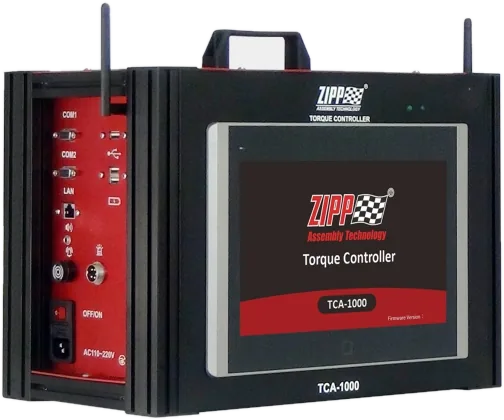
The ZIPPTORK TTES/TTAS Wireless Torque Transducer is an ideal measurement instrument for running capability studies. Its high sampling rate and wireless real-time data output allow you to capture clean torque-angle curves for every trial, giving you far richer data than a simple peak reading. Paired with ZIPPTORK’s data logging software, the results can be exported directly for statistical analysis.
- Techniques for Identifying When a Tool Is Out of Calibration
Tools drift. Springs fatigue, mechanisms wear, and environmental factors — temperature, humidity, impact loads — all take their toll over time. Waiting for an annual calibration cycle to catch a drifted tool is a quality risk that most manufacturers can’t afford.
Early warning signs to watch for:
- Shift in mean output: The tool consistently produces torque values above or below the target, even after operator adjustments.
- Increased scatter: Repeat measurements of the same joint show greater variation than during the last capability study.
- Click-torque discrepancy: For click-type wrenches, the audible click triggers at a different torque value than the tool’s set point.
- Torque-angle anomalies: In tools with angle monitoring, unexpected plateau shapes or early engagement signatures can signal mechanical issues.
Practical detection method — the “Reference Joint” check:
Keep a dedicated, calibrated reference joint (a torque simulation fixture or a standardized joint rig) at the workstation. At the start of each shift, apply the tool once and read the result with a traceable transducer. If the reading falls outside a predefined ±5% acceptance band, pull the tool for recalibration before production begins.
The ZIPPTORK Torque Tension Tester (TTT) is purpose-built for this kind of pre-shift verification. It simulates a real fastened joint — including both torque and axial clamp load — so the check reflects actual working conditions rather than a bench test in free air. Unlike simple torque analyzers, the TTT measures the torque-tension relationship directly, catching tools that apply correct torque but deliver incorrect clamp load due to friction variation.
- How to Validate and Adjust Torque Settings
Setting a target torque value is not a one-time calculation. Joint conditions change — different fastener lots, new surface treatments, supplier changes — and the torque setting that was correct last quarter may not be correct today.
Validation process:
- Run a joint study on the actual hardware (fastener, joint material, lubrication) to determine the torque-tension relationship. This establishes the K-factor (or nut factor) for your specific joint.
- Set a target torque that reliably delivers the required clamp load across the expected range of friction variation.
- Verify with actual assembly samples. Apply the target torque to a representative sample of joints, then measure residual clamp load using a bolt load sensor or the TTT.
- Adjust if needed. If the clamp load consistently exceeds or falls below the specification, revise the torque target and repeat the verification.
The ZIPPTORK TTT streamlines this validation cycle by providing simultaneous torque and tension readings in a single test. Engineers can directly observe how changes in lubrication or fastener batch shift the torque-tension curve — without having to run destructive joint teardowns. This is especially valuable when qualifying new fastener suppliers or approving engineering change orders.
For rotating assembly applications — power tools, assembly robots, end-of-line spindles — the TTES/TTAS Series can be installed inline to validate that the tool’s output torque matches the programmed set point under actual production load conditions, not just at the test bench.
- Methods for Measuring Residual Torque
Residual torque is the torque that remains in a fastened joint after the assembly tool has been removed. It is almost always lower than the applied torque because a portion of the energy goes into elastic recovery, embedment relaxation, and thread friction dissipation.
Understanding residual torque is critical for:
- Joint integrity assessment
- Failure investigation
- Torque audit programs
Common measurement methods:
Breakaway torque (most common): Apply a torque wrench slowly in the tightening direction until the fastener begins to move. The torque at which rotation initiates is the residual torque. This method is simple and widely accepted in quality auditing.
Back-off torque: Apply torque in the loosening direction and record the value at which the fastener first moves. This is generally slightly lower than breakaway torque.
Mark-and-check method: Mark the fastener head before tightening, apply torque, then attempt to advance the fastener by a small angle (typically 5–15°) with a calibrated wrench. If the fastener moves before reaching the target residual torque, the joint may be under-torqued.
Important caution: Measuring residual torque in the loosening direction on a safety-critical joint can permanently reduce its clamp load. For critical applications, destructive sampling plans should define which joints are checked.
The ZIPPTORK TTES/TTAS Wireless Torque Transducer is well suited for residual torque audits on rotating or shaft-mounted components, where measuring residual twist in the component — rather than in a threaded fastener — is required. Its wireless architecture means it can be mounted on a rotating shaft assembly and transmit data without disturbing the joint geometry.
- The Value of Implementing a Torque Auditing Program
A torque audit is a structured, recurring check of torque quality across your assembly process. It is the systematic answer to the question: Are we actually achieving what we intend to achieve, consistently, over time?
What a torque audit program includes:
- Defined sampling plan: Which joints, how many, how often, by whom.
- Acceptance criteria: Target torque, tolerance band, residual torque limits.
- Measurement instruments and methods: Standardized to ensure results are comparable over time.
- Escalation protocol: What happens when a joint fails audit — rework, quarantine, root cause investigation.
- Records and trending: Audit data logged with enough traceability to support regulatory review or customer audit requests.
Why it matters beyond compliance:
Audit data, accumulated over time, becomes a powerful process improvement tool. Trends in residual torque values can reveal tool wear before it causes failures. Shift-to-shift variation can expose operator technique issues or fixturing inconsistencies. And a documented audit history is your strongest defense in a product liability situation.
Building the program with ZIPPTORK tools:
The ZIPPTORK TTT provides a standardized, repeatable platform for torque audits at the fixture or joint level — measuring both applied torque and the resulting clamp load, so audit results reflect joint quality, not just wrench output. The TTES/TTAS Series extends audit capability to in-process verification, allowing quality teams to confirm torque delivery on automated assembly equipment without interrupting production.
Together, they create a continuous loop: the TTT validates joint-level outcomes, while the inline transducer validates tool-level process inputs. When both match, you have real confidence in your quality record.
Closing: Torque Measurement as a System
No single measurement, no single instrument, and no single checkpoint is sufficient on its own. A complete torque quality program is a system — tools verified before use, processes monitored during production, joints audited after assembly, and all data feeding back into a continuous improvement cycle.
ZIPPTORK’s Wireless Rotary Torque Transducers (TTES and TTAS Series) and Torque Tension Tester (TTT) are designed to serve this full system. Whether you’re setting up a new line, qualifying a fastener change, investigating a field failure, or satisfying a customer audit, the right measurement at the right point in the process is what separates consistent quality from costly uncertainty.
Start with one step: know your tool. Know your joint. Know your number.
For more information on ZIPPTORK torque measurement solutions, contact us at www.zipptork.com
Questions about this?
A product engineer answers directly — tell us the fastener, the tool already on the line and the torque you are aiming for.